Strategy-First Diagnostics: Turn Insights Into a 90-Day Plan That Actually Moves the Needle
If your business already has dashboards, assessments, and review calls, you’d think clarity would come easy.
You have data. You have meetings. You have plans.
Yet decisions drag, priorities clash, and the team stays busy without consistent momentum. That’s not a data problem. It’s a connection problem.
Most business growth diagnostics fail because they treat scorecards, strategy sessions, and 90-day plans as separate tools instead of one connected operating system. The scorecard becomes a reporting ritual. The strategy session turns into an interesting conversation. The 90-day plan collects dust after week two.
When they stay disconnected, you get more information and less traction.
A powerful business growth diagnostic starts with clear strategy (your target and path), breaks it into a focused 1-year view and 90-day action plan, then uses a tailored scorecard to measure, track, and improve every step.
That sequence turns disconnected insights into a real growth engine.
Why most diagnostics never create real growth
Leaders don’t lack tools - they lack integration and the right order. They collect data when things feel messy, run a strategy session when stretched, then move on without clear ownership or follow-through.
The result is the same cycle:
- Data gets collected
- The same patterns reappear
- Decisions stay reactive
- The team pushes hard but never fixes the real constraint
The problem is not lack of data - it’s disconnected decisions.
A scorecard on its own can’t set priorities. A strategy session without a 90-day plan becomes organized anxiety. A 90-day plan without a scorecard has no way to track real progress.
Growth comes when these three pieces work as one system.
What a useful business growth diagnostic should actually reveal
A strong business growth diagnostic for service businesses acts as a decision filter. It helps you answer:
- Where is growth slowing right now?
- Which issues are structural vs temporary?
- What’s the real cost of waiting?
- What must we prioritize in the next 90 days?
- Who owns the fix?
It usually highlights the same friction points:
- Capacity constraints - too much work sits with too few people
- Delivery friction - handoffs break and timelines slip
- Sales follow-up gaps - leads exist but momentum dies
- Leadership bottlenecks - decisions keep flowing upward
- Visibility gaps - reports exist but don’t drive action
If your diagnostic doesn’t expose these patterns and convert them into owned next steps, it’s just another report. Operating systems grow businesses.
Step 1: Start with strategy - set the target and direction
Everything begins here. Without a sharp strategy session for business growth, your efforts stay scattered.
Use the session to interpret pressure points, separate symptoms from root causes, and narrow focus:
- Which issue creates the biggest downstream cost?
- Which problem is making other problems worse?
- What can we fix fast vs what needs structural change?
- What should we ignore to protect focus?
The output is simple: turn “everything matters” into “these three things matter first.” No long lists. Just clear decisions that align the whole business.
Step 2: Break strategy into a focused 90-day business growth plan
Strategy without execution is conversation. Translate it into a tight 90-day plan - three to five priorities maximum.
Each priority answers:
- What exactly are we fixing?
- Why does it matter now?
- What does success look like by day 90?
- Who owns it?
- What milestones show progress?
Distinguish projects (e.g., redesign client onboarding to stop broken handoffs) from rhythms (e.g., weekly review of three key indicators). You need both.
Your 90-day business growth plan should be the bridge between insight and momentum.
Keep it short enough to review weekly. If it has no owner or too many priorities, it’s a wish list, not a plan.
Step 3: Build your business diagnostic scorecard to track and improve
Only now build or refine your business growth scorecard - because it’s no longer measuring random activity. It tracks the exact priorities chosen in strategy and locked into the 90-day plan.
Focus on a short set of indicators across capacity, delivery, sales/follow-up, leadership load, and visibility.
The scorecard’s job is to expose operational drag early and show whether the 90-day plan is moving the needle. It turns weekly reviews into fast corrections instead of quarterly surprises.
How to keep diagnostics from becoming a one-time exercise
Turn the system into a repeatable rhythm:
- Strategy session (quarterly or as needed)
- 90-day plan reviewed weekly for accountability
- Business diagnostic scorecard reviewed weekly for signals
This rhythm catches issues earlier, prioritizes faster, and builds resilience. When the leadership team owns it together, the business stops depending on one person.
When to DIY and when to get expert support
DIY works well when your team already has strong decision-making habits, clear ownership, and bandwidth to follow through.
Get expert support when the same problems keep cycling, priorities shift constantly, or leadership is too deep in delivery to build the system. That’s when turning disconnected tools into one growth engine delivers the fastest lift.
Ready to connect your diagnostics to real traction?
Most businesses don’t need more diagnostics. They need one diagnostic system - strategy that sets direction, a 90-day business growth plan that creates focus, and a business growth scorecard that drives accountability.
If you have data but still lack momentum, this is the missing link.
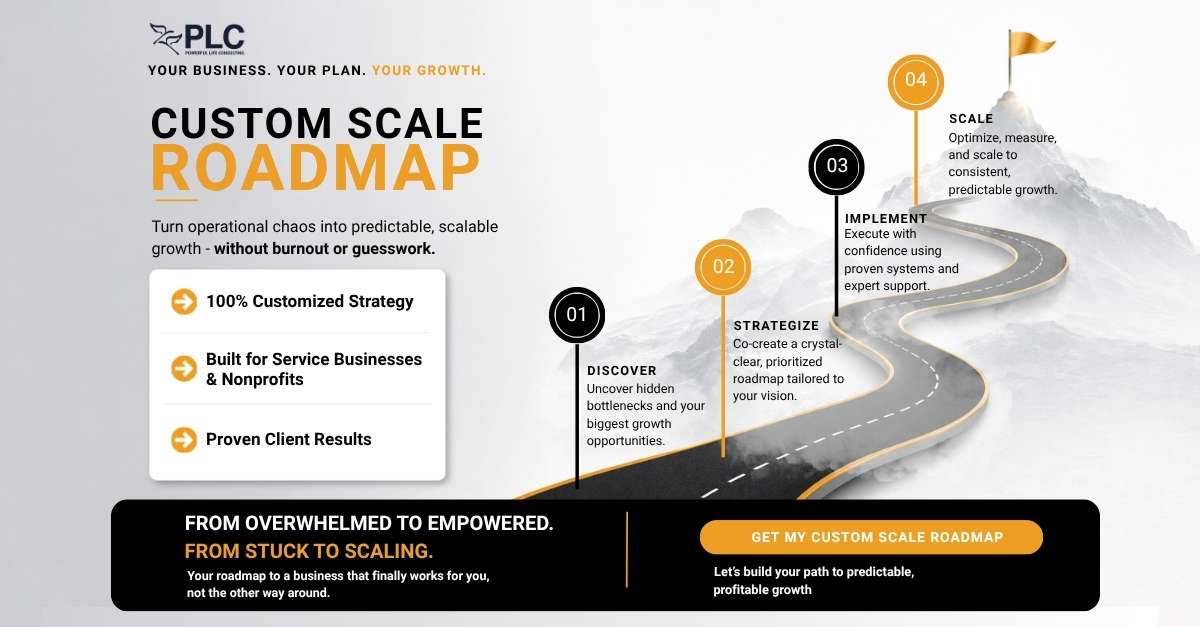
The Custom Scale Roadmap helps leaders like you turn diagnostic insight into sharp priorities, clean ownership, and execution that actually holds under growth pressure.
Stop letting good insights sit disconnected from results.
Let’s turn your current reality into three priorities your team can own and deliver in the next 90 days. Your move.